FDP
Managing Your Money: Simple ways to Save, Spend and Stay Financially
Managing Your Money: Simple ways to Save, Spend and Stay Financially
Event Name : Managing Your Money: Simple ways to Save, Spend and Stay Financially
Organized By : IQAC
Venue : Own book Reading Hall Ist floor
Date : 29-04-2026
Time : 11:00 A.M – 1:00 P.M
Organized By : IQAC
Venue : Own book Reading Hall Ist floor
Date : 29-04-2026
Time : 11:00 A.M – 1:00 P.M
Basic Event Details
| Title of the Event | Managing Your Money: Simple Ways to Save, Spend and Stay Financially Safe |
| Type of Event | Financial Awareness Programme (Management Development Programme – MDP) |
| Organizing Department / Unit | Internal Quality Assurance Cell (IQAC), SMVMCH |
| Date(s) | 29th April 2026 |
| Time | 11:00 AM – 1:00 PM |
| Venue | Own Book Reading Hall, First Floor, College Block, SMVMCH |
| Target Audience | Non-Teaching Staff of SMVMCH |
| Number of Participants | 35 |
Resource Persons
| S.No | Name | Designation / Department |
| 1 | Dr. Preethi. T | Resource Person |
| 2 | Mr. Rajesh. D | Senior Assistant, IQAC, SMVMCH |
Organizing Committee
| Organizing Team | Internal Quality Assurance Cell (IQAC), SMVMCH |
| IQAC Coordinator | Dr. Reenaa Mohan |
Event Objectives
- To enhance the financial literacy and awareness of non-teaching staff on personal savings, investment options and safe financial practices.
- To educate staff about government-backed savings schemes and pension plans available to them.
- To create awareness about financial frauds, predatory lending and how to avoid them.
- To empower staff to make informed and responsible financial decisions for their future and family security.
Event Detail Summary
The Internal Quality Assurance Cell (IQAC) of Sri Manakula Vinayagar Medical College and Hospital organized a Financial Awareness Programme titled “Managing Your Money: Simple Ways to Save, Spend and Stay Financially Safe” on 29th April 2026 for the non-teaching staff of the institution. The programme was held at the Own Book Reading Hall, First Floor, College Block, from 11:00 AM to 1:00 PM and was attended by 35 participants drawn from various departments.
Programme Highlights
- The session commenced at 11:00 AM with the first resource person, Dr. Preethi. T, who delivered an engaging and practical talk covering the importance of financial planning for salaried employees. Her session spanned from 11:00 AM to 12:15 PM and covered the following key topics:
- The 'Pay Yourself First' principle and the 10% savings rule.
- The 50-30-20 budget allocation rule (Needs–Wants–Savings).
- Government-guaranteed savings schemes: Post Office RD, PPF, Sukanya Samriddhi Yojana, Mahila Samman Saving Certificate and Atal Pension Yojana.
- Introduction to Mutual Funds and the SIP (Systematic Investment Plan) concept.
- Red flags to avoid: chit funds, MLM schemes and private moneylenders.
- Loan awareness: comparison of EPF advances, gold loans, salary advances versus high-interest credit card and private moneylender traps.
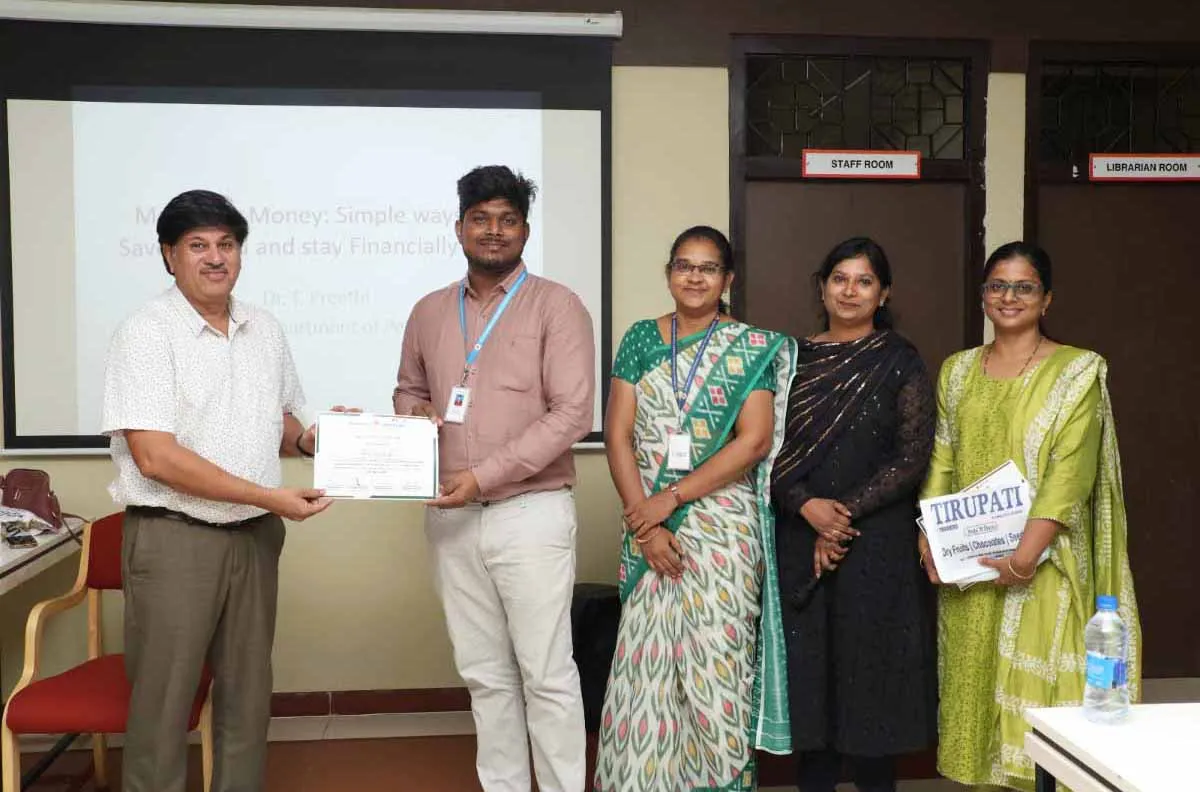
- A Certificate of Appreciation was presented to Dr. Preethi. T by Dr. R. N. Kagne, Director, SMVMCH, and Dr. Soundariya. K Deputy Dean (Academic-UG), in recognition of her contribution as Resource Person.
- Following a short intermission, the second resource person Mr. Rajesh. D, Senior Assistant, IQAC, SMVMCH, resumed the session from 12:30 PM to 1:00 PM. He reinforced the key concepts discussed earlier with practical examples and addressed queries from the participants. A Certificate of Appreciation was also presented to Mr. Rajesh. D in recognition of his contribution.
- The programme provided a highly interactive platform where staff members actively participated, asked questions and shared their personal financial experiences, making the session lively and relatable.
Participants
- Non-teaching staff members from various clinical and non-clinical departments.
- Total number of participants: 35
Feedback about the Programme
- Participants expressed that the session was highly informative and practically relevant to their day-to-day financial decisions.
- Many staff members were unaware of government savings schemes such as Sukanya Samriddhi Yojana and Atal Pension Yojana, and expressed interest in enrolling in them after the session.
- The presentations by both resource persons were appreciated for their simple, jargon-free language and relatable real-life examples.
- Staff suggested that such financial literacy programmes should be conducted periodically to update their knowledge on new schemes and investment options.
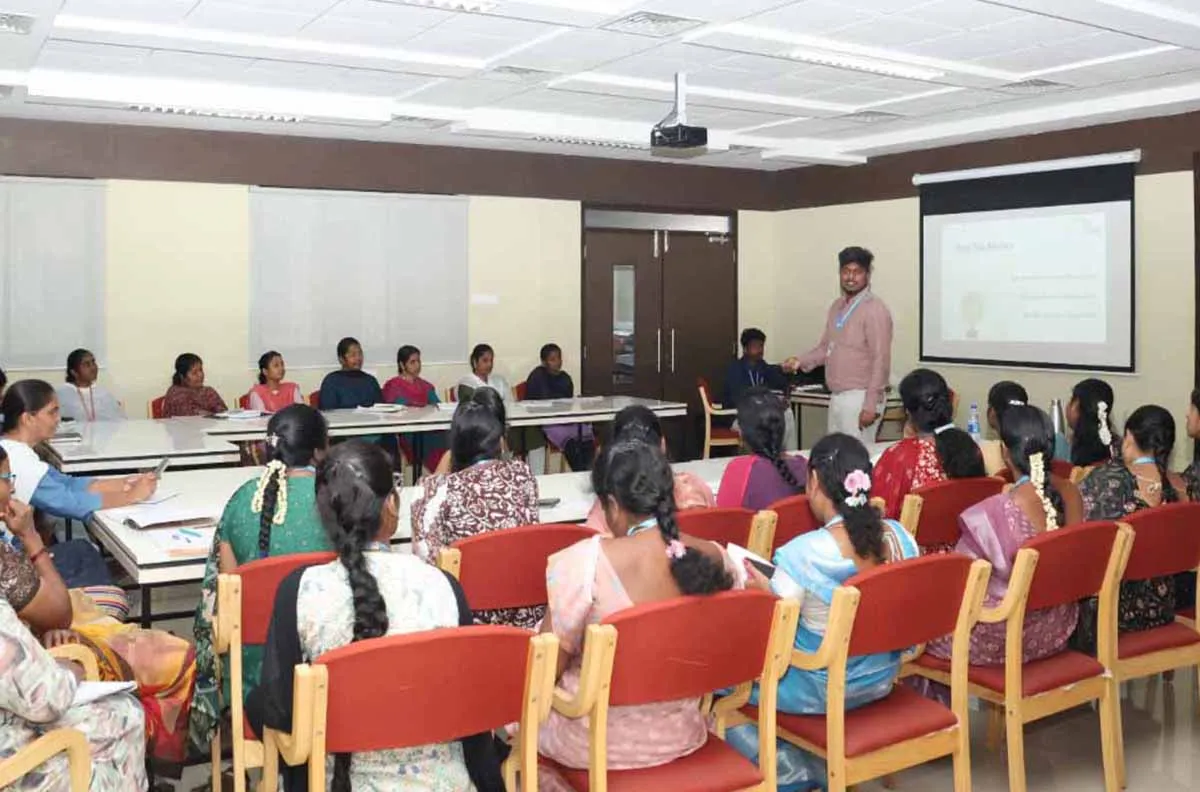
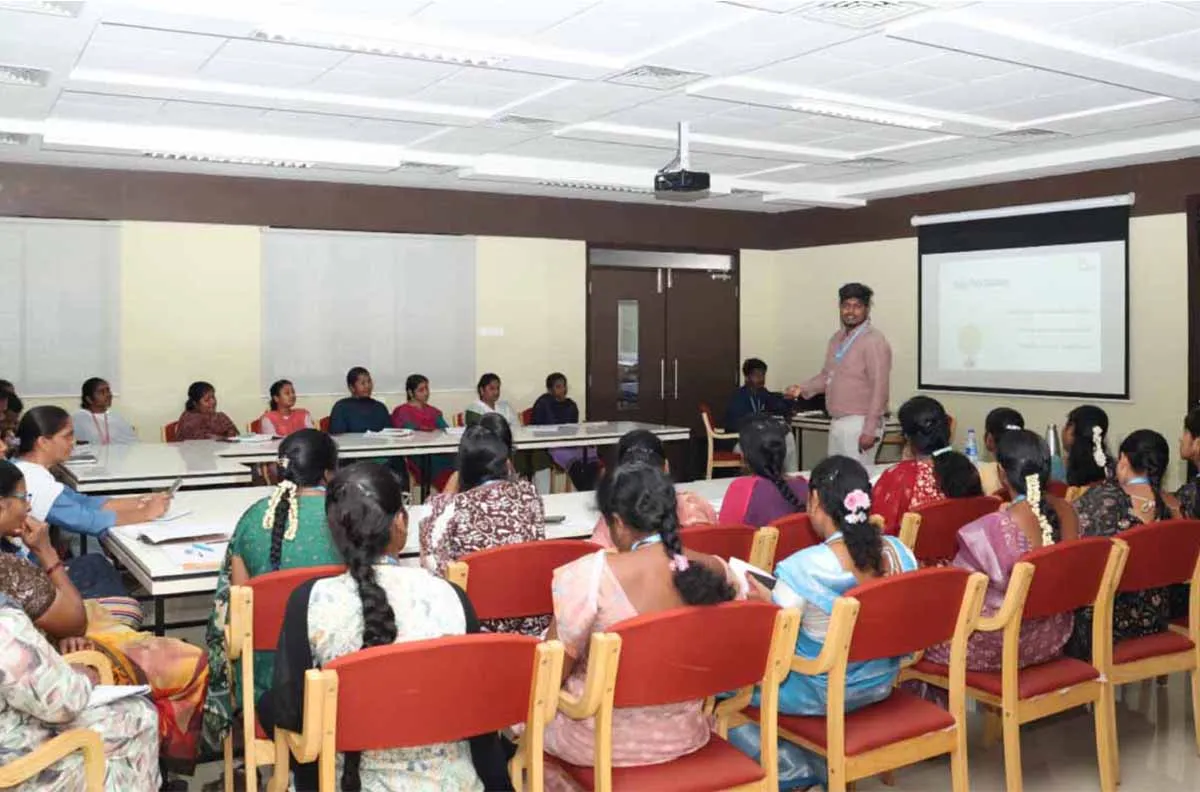
Christmas day celebration 2025
Christmas day celebration 2025
Date: 24-12-2025
Time: 3:30 P.M – 4:30 P.M
Venue: SMVMCH Courtyard
Organized by: IQAC & Mulya Pravah Committee
Target Audience: UG or PG Students, Faculty, Non-Teaching Staffs
Participants: 250
Event Objectives
- To foster a spirit of peace, joy, sharing and inclusiveness among students, faculty and staff in line with institutional core values.
- To provide a platform for students to showcase cultural and artistic talents related to the Christmas theme.
- To strengthen inter-professional bonding and campus well-being through a common festive gathering.
Event Detail Summary
The Christmas – IQAC Celebration at SMVMCH on 24 December 2025 was a value-oriented cultural event coordinated by the IQAC and Mulya Pravah Committee in the SMVMCH Courtyard, College Block. Through carols, cultural performances, symbolic rituals and interactive activities, the programme brought together students, faculty and staff to share the message of peace, joy and human values, and served as a platform for student expression and community bonding within the campus
Programme highlights
- The celebration began with a welcome address by the organizers, introducing the significance of Christmas and the values of compassion, service and humanity.
- This was followed by Christmas carols and thematic cultural performances (songs, skits and dances) by UG students, interns and staff, highlighting messages of unity and goodwill.
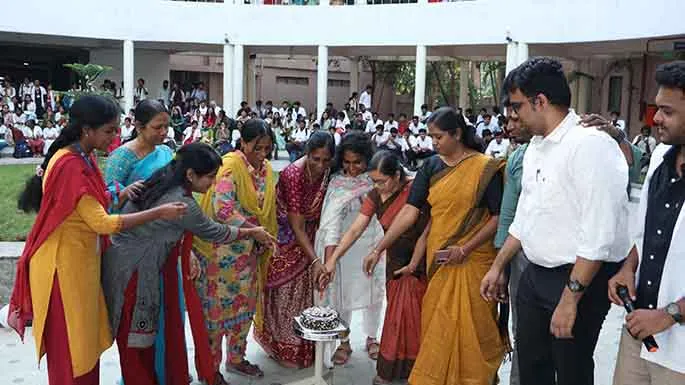
- A symbolic cake-cutting and distribution of sweets created a festive atmosphere and encouraged sharing among participants.
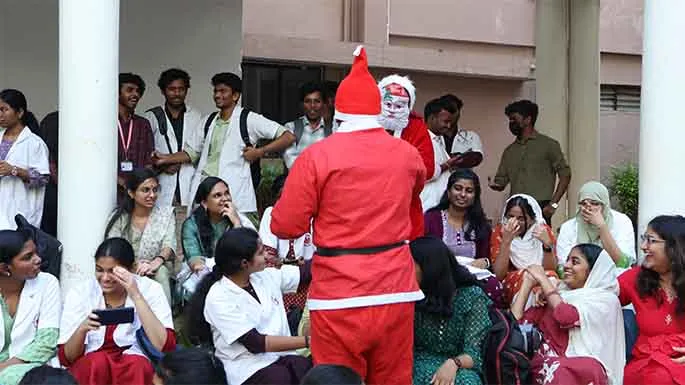
- A Santa Claus entry with interactive games and spot events engaged students and staff, promoting participation and team spirit.
- Faculty members delivered brief reflections linking Christmas values with the medical profession, patient care and ethics.
- The programme concluded with a vote of thanks and group photograph of participants and the organizing team
Participants
- Students from various batches of MBBS and allied health sciences.
- Interns and postgraduate residents.
- Teaching faculty and non-teaching staff from different departments.
- Members of IQAC, Mulya Pravah Committee and student volunteers involved in planning and conduct of the event.
Feedback about the programme
- Participants appreciated the lively and inclusive nature of the celebration and expressed that it created a refreshing break from routine academic activities.
- Students and staff remarked that the cultural events and interactive segments effectively conveyed the message of peace, sharing and togetherness, and suggested organizing similar value-based programmes regularly.
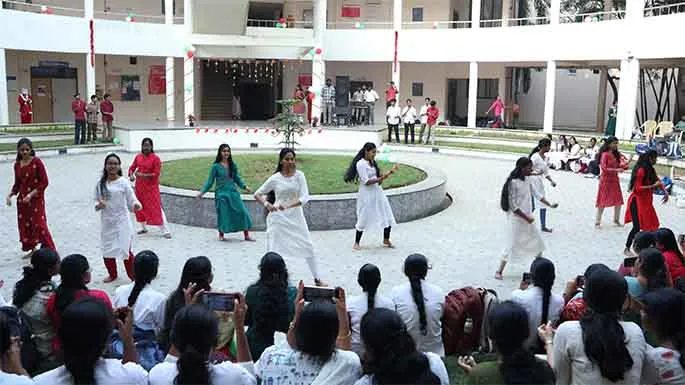
NIRF audit Academic Year 2025
NIRF audit Academic Year 2025
Date: 17th & 18th November 2025
Time: 09:00 AM – 4:30 PM
Venue: College Council Hall
Organized by: Internal Quality Assurance Cell (IQAC), SMVMCH
Organizing Secretary: Dr. Deepika V
Moderator: Prof Umesh Chandrasekhar
Participants: 40 (Coordinators/Incharge, Administrative Staff, Supporting Team Members)
Time: 09:00 AM – 4:30 PM
Venue: College Council Hall
Organized by: Internal Quality Assurance Cell (IQAC), SMVMCH
Organizing Secretary: Dr. Deepika V
Moderator: Prof Umesh Chandrasekhar
Participants: 40 (Coordinators/Incharge, Administrative Staff, Supporting Team Members)
Introduction
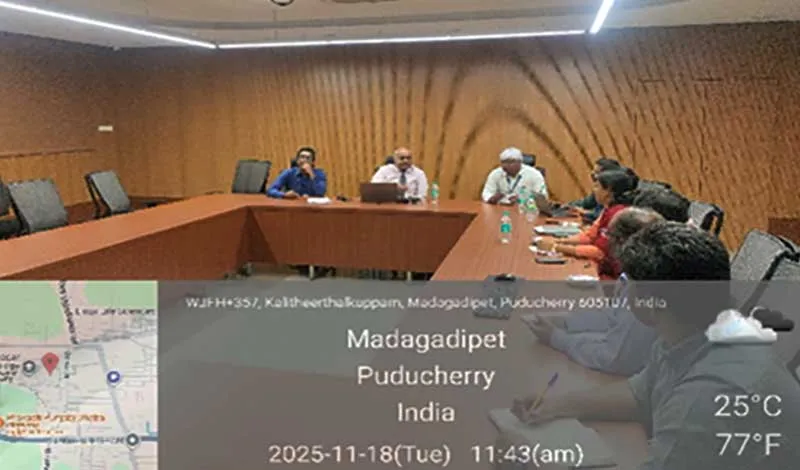
The Internal Quality Assurance Cell (IQAC) of Sri Manakula Vinayagar Medical College & Hospital organized a two-day NIRF Audit Review on 17th–18th November 2025. The objective was to evaluate institutional readiness for NIRF 2026 submission and improve documentation quality across all NIRF parameters. The session was designed to enhance the NIRF Parameter category of administrative and supporting staff—aligning with IQAC’s objective.
Objectives of the Programme
- Strengthening documentation and process readiness for all 22 NIRF medical parameters.
- Ensuring each NIRF in-charge understands data requirements, templates, and evidence format.
- Building digital capabilities and AI-enabled documentation skills.
- Promoting financial awareness as part of institutional staff development.
Summary of Discussions with NIRF Parameter In-Charges
During the audit, each parameter in-charge presented the available data, identified gaps, and discussed improvements required. Key points are noted below:
- Student Enrolment Data: Year-wise admission data available; category distribution needs consolidation for last 3 years.
- Faculty Information: Sanctioned vs. working positions updated; visiting faculty records to be standardized.
- Examination Performance: MBBS results strong; PG NEET score tracking requires structured format.
- Academic Infrastructure: Library and lab resources adequate; need updated equipment inventory.
- Research Publications: PubMed/Scopus indexing lists updated; citation verification pending.
- Research Funding: Internal grants documented; need unified database for ICMR/DST/industry funding.
- Patents & Innovations: Innovations discussed; documentation of filed patents under compilation.
- Clinical Exposure: Patient load adequate; student exposure data to be linked with logbooks.
- Internship & Residency: Program data available; dropout statistics to be refined.
- Patient Care Quality: NABH indicators available; patient satisfaction report to be updated.
- Governance & Finance: Budget reports present; NMC compliance updates ongoing.
- Interdisciplinary Collaboration: MoU list under revision; need impact documentation.
Learning for growth: Office Skills and Personal Finance
Learning for growth: Office Skills and Personal Finance
Date: 17th & 18th November 2025
Time: 09:00 AM – 4:30 PM
Venue: College Council Hall
Organized by: Internal Quality Assurance Cell (IQAC), SMVMCH
Organizing Secretary: Dr. Deepika V
Moderator: Prof Umesh Chandrasekhar
Participants: 40 (Coordinators/Incharge, Administrative Staff, Supporting Team Members)
Time: 09:00 AM – 4:30 PM
Venue: College Council Hall
Organized by: Internal Quality Assurance Cell (IQAC), SMVMCH
Organizing Secretary: Dr. Deepika V
Moderator: Prof Umesh Chandrasekhar
Participants: 40 (Coordinators/Incharge, Administrative Staff, Supporting Team Members)
Introduction
The Internal Quality Assurance Cell (IQAC) of Sri Manakula Vinayagar Medical College & Hospital organized a two-day NIRF Audit Review on 17th–18th November 2025. The objective was to evaluate institutional readiness for NIRF 2026 submission and improve documentation quality across all NIRF parameters. The session was designed to enhance the NIRF Parameter category of administrative and supporting staff—aligning with IQAC’s objective.
Objectives of the Programme
- Strengthening documentation and process readiness for all 22 NIRF medical parameters.
- Ensuring each NIRF in-charge understands data requirements, templates, and evidence format.
- Building digital capabilities and AI-enabled documentation skills.
- Promoting financial awareness as part of institutional staff development.
Summary of Discussions with NIRF Parameter In-Charges
During the audit, each parameter in-charge presented the available data, identified gaps, and discussed improvements required. Key points are noted below:
- Student Enrolment Data: Year-wise admission data available; category distribution needs consolidation for last 3 years.
- Faculty Information: Sanctioned vs. working positions updated; visiting faculty records to be standardized.
- Examination Performance: MBBS results strong; PG NEET score tracking requires structured format.
- Academic Infrastructure: Library and lab resources adequate; need updated equipment inventory.
- Research Publications: PubMed/Scopus indexing lists updated; citation verification pending.
- Research Funding: Internal grants documented; need unified database for ICMR/DST/industry funding.
- Patents & Innovations: Innovations discussed; documentation of filed patents under compilation.
- Clinical Exposure: Patient load adequate; student exposure data to be linked with logbooks.
- Internship & Residency: Program data available; dropout statistics to be refined.
- Patient Care Quality: NABH indicators available; patient satisfaction report to be updated.
- Governance & Finance: Budget reports present; NMC compliance updates ongoing.
- Interdisciplinary Collaboration: MoU list under revision; need impact documentation.
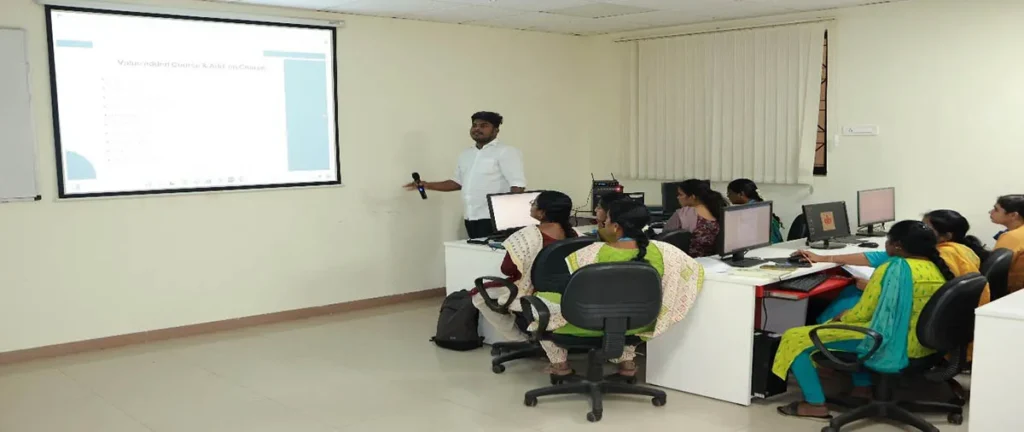
Workshop on “Choice Based Credit System (CBCS)”
Workshop on “Choice Based Credit System (CBCS)”
Date: 25th July 2025
Time: 10:00 AM onwards
Venue: MEU Hall, College Block
Organized by: IQAC, SMVMCH
Organizing Secretary: Mr. Rajesh Dharmasekar
Participants: Faculty members from all departments, administrators, and curriculum committee members
Total Participants: 32
Time: 10:00 AM onwards
Venue: MEU Hall, College Block
Organized by: IQAC, SMVMCH
Organizing Secretary: Mr. Rajesh Dharmasekar
Participants: Faculty members from all departments, administrators, and curriculum committee members
Total Participants: 32
Objective
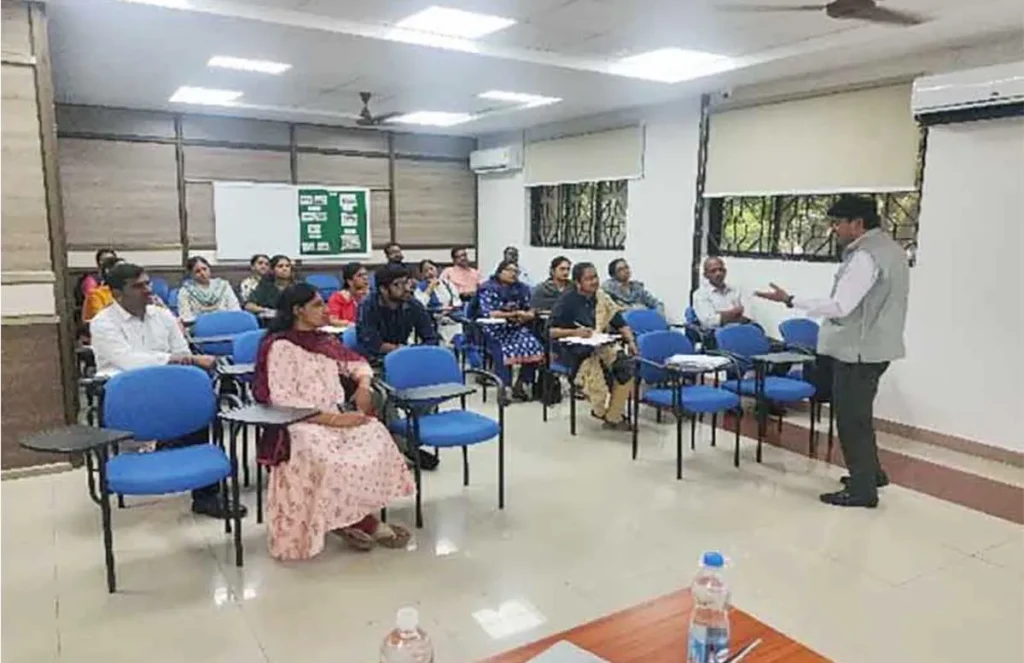
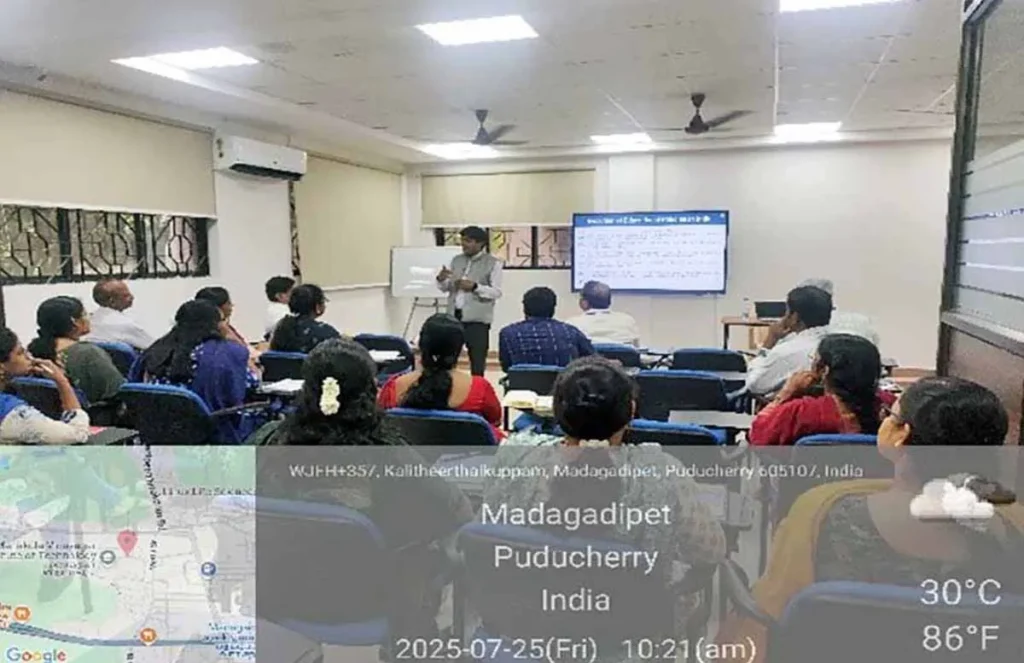
As part of the 5th Year Celebration of the National Education Policy (NEP) 2020, the Internal Quality Assurance Cell (IQAC) of Sri Manakula Vinayagar Medical College & Hospital (SMVMCH) organized a Workshop on the Choice Based Credit System (CBCS). The initiative aimed to sensitize faculty and curriculum planners on the practical implementation of CBCS in medical education in alignment with NEP 2020.
Resource Person
The session was led by Dr. (Prof.) Vivek Inder Kochhar, Vice Chancellor, Takshashila University, a visionary academic leader with expertise in curriculum development and NEP implementation.
Workshop Highlights
Dr. Kochhar delivered an enlightening and comprehensive session covering the philosophy, framework, and academic benefits of CBCS under NEP 2020. The talk emphasized flexibility, academic freedom, and competency-based progression. Major topics included:
- Introduction to NEP 2020: Its emphasis on flexibility, learner-centricity, and multidisciplinary learning.
- CBCS Framework Overview
- The rationale behind credits and modular structure.
- The formula for credit calculation:
- 1 Credit = 15 hours of theory
- 1 Credit = 30 hours of practical/clinical/lab work
- 2 Credits = 30 hours for a theory or 60hr practical
- How CBCS can be integrated into MBBS, MD, and MS curricula.
- Mapping competencies to learning outcomes.
- Defining the workload and outcomes per credit.
- Structuring elective modules and research credits.
Assessment Strategies:
- Continuous and formative assessments.
- Linking competencies to internal assessments and summative evaluations.
Curriculum Planning:
- Steps to frame CBCS-aligned curriculum plans.
- Role of curriculum committee and departmental coordination.
- Use of logbooks, reflective portfolios, and self-directed learning components.
Participation & Engagement
The workshop witnessed enthusiastic participation from more than 32 faculty members representing pre-clinical, para-clinical, clinical departments, as well as members of the academic and administrative wings. The session was interactive, with numerous queries regarding credit calculations, clinical hours, integration with electives, and student evaluation methods.
Session Conclusion
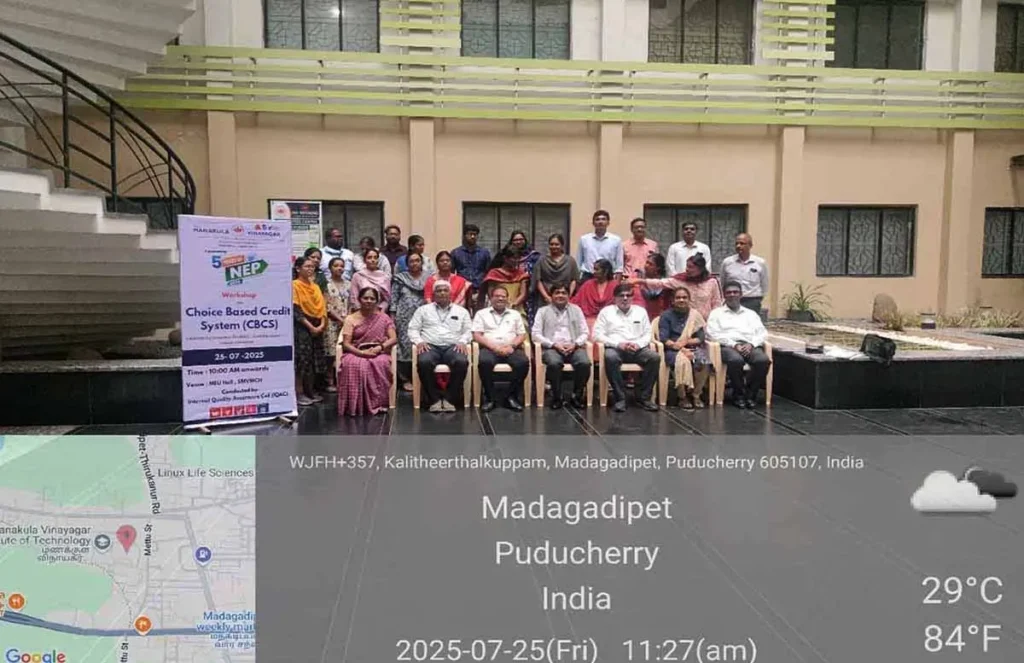
The session concluded with a felicitation ceremony, where a memento of honor and a certificate of appreciation were presented to Dr. Vivek Inder Kochhar by the organizing team. A group photograph was taken to commemorate the occasion, capturing the collective enthusiasm and academic spirit of the event.
Outcome & Impact
- Faculty gained clarity on the credit-hour system, especially in the context of medical education.
- The session served as a capacity-building platformto prepare the institution for phased implementation of NEP 2020 and CBCS.
- Actionable insights were taken for incorporating CBCS into the curriculum structure at SMVMCH, particularly for electives and skill-based modules.
Feedback & Follow-Up
Feedback collected from participants indicated high satisfaction, and further requests were made for follow-up workshops on curriculum mapping, assessment frameworks, and credit-based student tracking systems.
EmpowerEd 360: Hands-on Mastery of ICT Tools, Gamification & AI for Smarter Teaching
EmpowerEd 360: Hands-on Mastery of ICT Tools, Gamification & AI for Smarter Teaching
Event Name: EmpowerEd 360: Hands-on Mastery of ICT Tools, Gamification & AI for Smarter Teaching
Organized By: IQAC
Venue: Digital Library, SMMCH
Date: 16-05-2025 & 29-05-2025
Time: 9:00 A.M
Organized By: IQAC
Venue: Digital Library, SMMCH
Date: 16-05-2025 & 29-05-2025
Time: 9:00 A.M
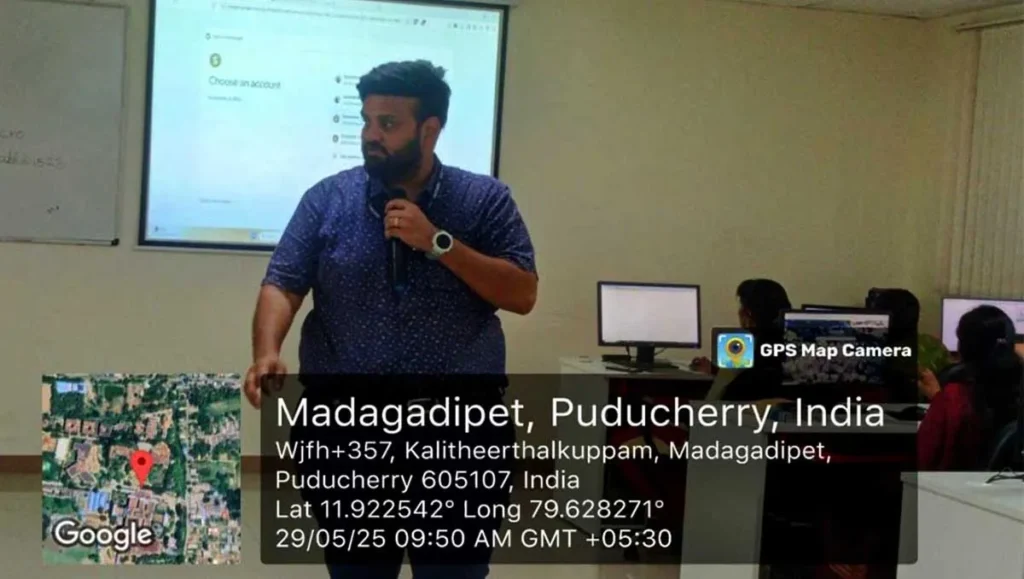
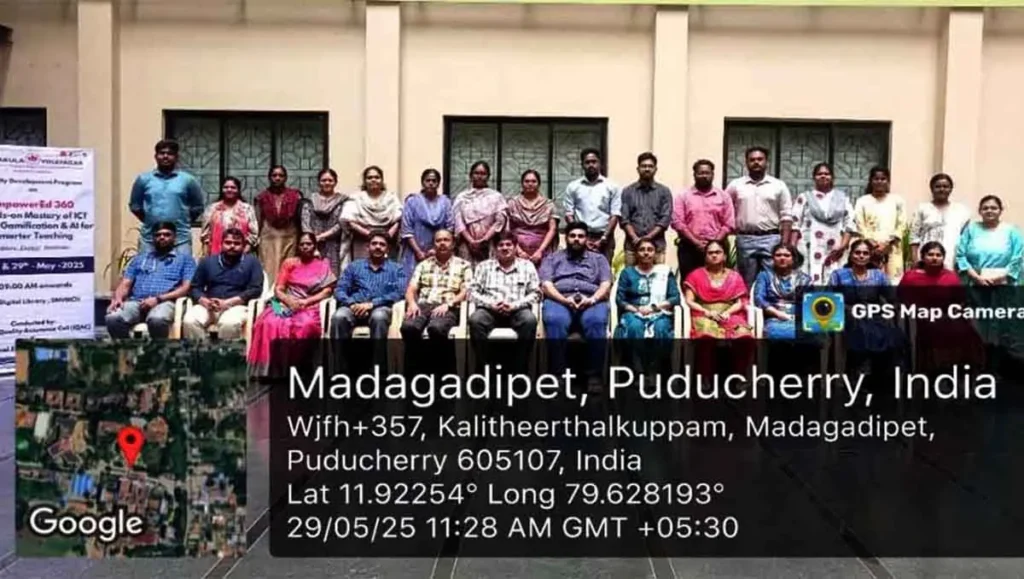
A two-day Faculty Development Program titled “Empowered 360: Hands-on Mastery of ICT Tools, Gamification & AI for Smarter Teaching” was organized on May 16th and 29th, 2025 at the Digital Lab, SMVMCH. The objective of the FDP was to provide faculty members with the necessary skills and knowledge to effectively integrate modern digital tools, gamification strategies, and AI applications into their teaching practices.
Participants:
The program saw the enthusiastic participation of 60 faculty members, including Professors, Associate Professors, and Assistant Professors from various departments.
Organizers:
- Organizing Secretary: Rajesh, IQAC
- Event Coordinator: V. Deepika
Educational Sessions and Speakers:
- Surendran V(M.B.B.S (CM), DNB (CM), MBA (EPGDEPI), PGDMRCH, PGDPHSM, PGDFM)
- Topic: Gamification & AI for Smarter Teaching
- Focused on practical approaches to using game-based learning techniques and AI-powered tools to enhance classroom engagement and improve student outcomes.
- Rajesh, IQAC
- Topic 1: EmpowerEd 360: Hands-on Mastery of ICT Tools
- Topic 2:Notebook for Medical Education and Google AI Studio for AI-Driven E-Content Delivery
- Provided hands-on training and demonstrations on digital content creation, online collaborative tools, and the integration of AI in medical education.
Conclusion
The FDP was a resounding success, providing valuable insights and practical skills to faculty members for enhancing their teaching methodologies. Through interactive sessions and real-time demonstrations, the program fostered a greater understanding of ICT, gamification, and AI in education. Participants expressed positive feedback, highlighting the relevance and applicability of the content. This initiative significantly contributed to the professional development of faculty and supported SMVMCH’s mission toward innovative and technology-driven teaching.
Feedback Collected:
Comprehensive feedback was collected from all participants at the end of the sessions. The responses indicated high levels of satisfaction regarding the content, delivery, and usefulness of the topics covered. Participants appreciated the hands-on approach and expressed interest in attending similar future training programs to continue enhancing their professional skills.